
In this issue
- Inside the Mamdani Administration’s Ban on Hotel “Junk Fees”
- The Rise of Active Adult Rental Housing: Demographics, Demand, Supply, Rent Dynamics, and Availability of Capital
- New ICC Arbitration Rules Took Effect June 1, 2026: What Hotel Owners and Managers Should Know
- A Tale of Two Hotel Markets
- The Leisure Law Insider Jigsaw Puzzle

Upcoming and Recent Events
- The Hospitality Sector Team is sponsoring the 2026 Georgetown Law Hotel & Lodging Legal Summit on October 22- 23, in Washington, DC. The Georgetown HLLS is the premier forum for navigating the complex legal landscape of the hotel and lodging industry. We'll see you there!
- A special congratulations to Josh Bernstein, Jennifer Kramer, Ron Kornreich, Michelle Oms, Tammy Malvin, Ricky Patel, and Andy Robins on their recognition in the Best Lawyers 2027 Guide for Leisure and Hospitality Law. Josh Bernstein, was also named Lawyer of the Year in Leisure and Hospitality Law.
Inside the Mamdani Administration’s Ban on Hotel “Junk Fees”
 KEY TAKE
New York City has recently adopted one of the most expansive junk-fee prohibitions in the country, banning both hidden fees and unexpected credit card holds or deposits for hotels.
Effective February 21, 2026, the NYC Department of Consumer and Worker Protection (DCWP) adopted the final NYC Hotel Junk Fee Rule, which requires bookings and advertising for hotel stays to have upfront and conspicuous disclosure of the total price. The Junk Fee Rule is targeted at so-called “junk fees” and deceptive pricing practices and expands upon the Federal Trade Commission’s 2024 national framework. We previously covered FTC’s Final Rule in Leisure Law Insider Vol. 3 and in Leisure Law Insider Vol. 5.
Read More
The Rise of Active Adult Rental Housing: Demographics, Demand, Supply, Rent Dynamics, and Availability of Capital
KEY TAKE
Active adult rental housing is emerging as a compelling real estate investment opportunity, driven by rapidly growing senior renter demand, historically constrained supply, strong occupancy and rent growth, and increasing institutional capital interest.
Active adult rental housing is a distinct property type positioned between conventional multifamily apartments and traditional senior housing independent living communities. As defined by the National Investment Center for Seniors Housing & Care (NIC), active adult rental properties are age-eligible, market-rate, multifamily rental properties that are lifestyle-focused but do not provide meals through general operations. Designed for older adults ready to downsize to a maintenance-free lifestyle but not yet requiring the services of traditional independent living, these communities typically require at least one qualifying resident to be 55, 62, or 65 years of age or older, depending on the local jurisdiction. As of the first quarter of 2025, NIC MAP tracked nearly 800 active adult rental properties totaling approximately 118,000 units, a fraction of the approximately two million senior housing units it tracks overall.
Read More
New ICC Arbitration Rules Took Effect June 1, 2026: What Hotel Owners and Managers Should Know
KEY TAKE
New ICC Rules provide faster timelines, lower costs, and stronger emergency relief — with action items for your arbitration clauses
If your hotel management agreements or any other related agreements contain an ICC arbitration clause, the rules governing how those disputes are resolved changed as of June 1, 2026. The revisions are designed to make ICC arbitration faster and more cost-effective. While the changes are generally favorable for hospitality parties, a few of them warrant consideration and review of your existing template clauses to ensure the changes do not adversely impact your expectations.
Read More
A Tale of Two Hotel Markets
 Lou Plasencia, Chairman and CEO of The Plasencia Group, is responsible for the firm's business development activities and the oversight of all acquisitions, dispositions, and advisory engagements. He began his career with Hyatt Hotels Corporation over thirty years ago. After his departure from Hyatt, Lou spent a number of years growing the hospitality investment sales division of a major national commercial real estate firm.
Today’s hotel investment market is no longer moving as a single, unified sector within the global commercial real estate arena. Lodging capital is increasingly moving into two favored camps: luxury and resort properties at one end of the spectrum, and newer efficient select-service hotels at the other. Although both categories benefit from strong investor interest, each category appeals for very different reasons. What unites them is their ability to offer a clearer investment thesis than the middle of the lodging market, namely legacy full-service properties flying the flags of very familiar traditional hotel brands.
Read More

The Leisure Law Insider Jigsaw Puzzle
This new puzzle is for a fictional hotel in a popular show based in The Capital. Can you figure it out? The first five readers to solve the puzzle will receive a special Akerman gift!
Please send your answers to [email protected] by Friday, October 30, 2026.
Common Elements Puzzle
Create three groups of three from the nine entries below. Each entry may be used only once, and each group is connected by a shared word, phrase, or theme. Hint: all three groups relate to the hospitality industry. The first five readers who solve it correctly will receive a special Akerman gift!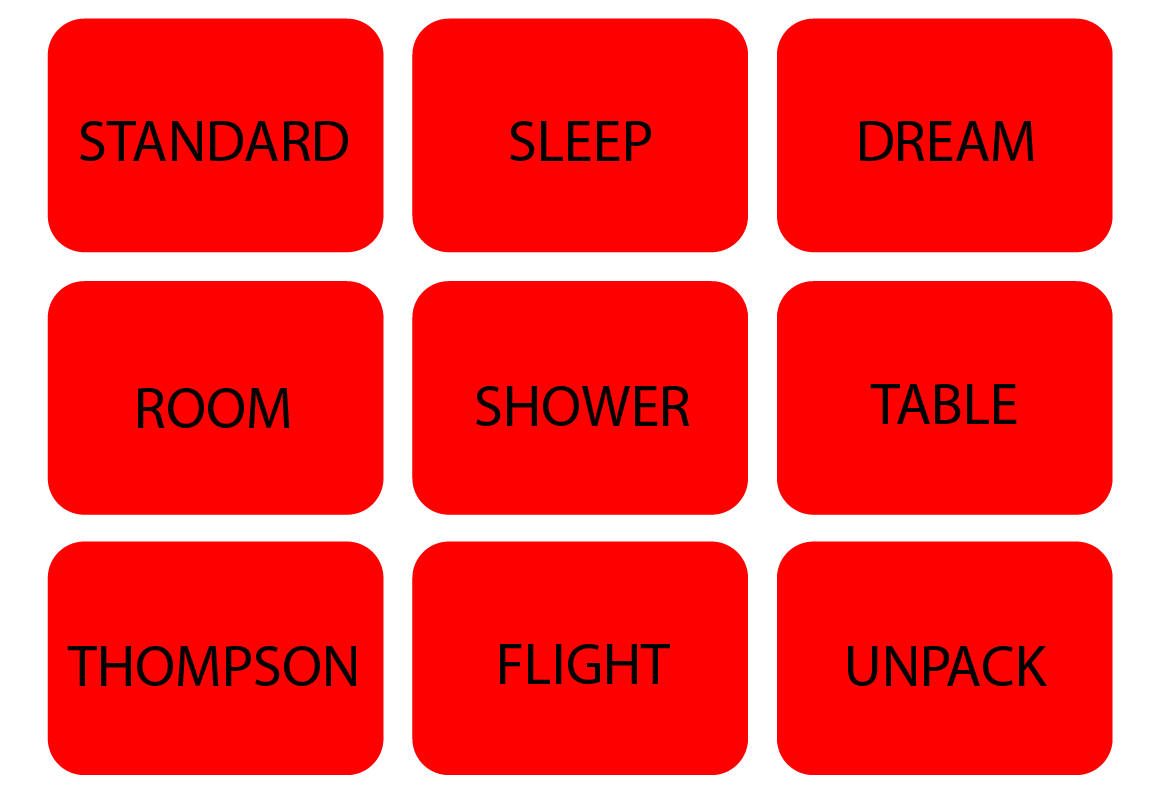
Please send your answers to [email protected] by Friday, October 30, 2026.
Congratulations to the winners of last's edition’s puzzle! The answers were: MAINTENANCE, HOUSEKEEPING, VALET – HOTEL WORKERS; KING, QUEEN, SUITE – ROOM CATEGORIES; TEMP, HOME, WALDO – STARTS OF HILTON BRANDS